🎙️ Welcome to The Ground Game Podcast! 🎙️
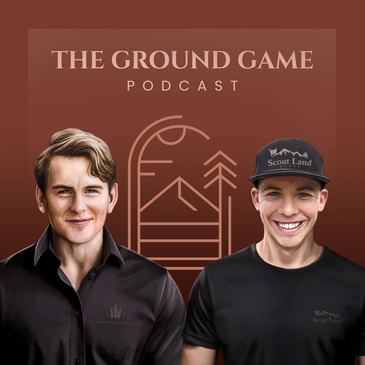
Join hosts Clay Hepler and Justin Piche as they kick off the very first episode of The Ground Game Podcast, your ultimate guide to mastering the art of land investing, team building, and land development. If you're interested in a raw, transparent look into what it takes to build a seven-figure land investment business, this podcast is for you!
In this debut episode, Clay and Justin dive deep into:
- The Unique Purpose of The Ground Game Podcast: Discover why this isn't just another real estate podcast. Learn about the inside baseball approach that promises to give you a behind-the-scenes look at the real challenges and triumphs of successful land investors.
- Who Will Benefit: Whether you're a seasoned investor or just starting out, find out how this podcast can help you scale your business, improve your strategies, and achieve your financial goals.
- Real Talk on Real Challenges: From hiring the right team members to navigating market conditions, Clay and Justin share their personal experiences and the lessons they've learned along the way.
- Setting and Achieving Big Goals: Get inspired by their ambitious targets and learn how they plan to hit them. This isn't just about setting goals; it's about the strategic shifts and real-time adjustments that make those goals achievable.
- Building a Business, Not a Job: Hear about the importance of leadership, team building, and leveraging global talent to create a business that supports your lifestyle, not the other way around.
This episode is packed with valuable insights and actionable advice that you won't find anywhere else. So, if you're ready to take your land investing game to the next level, hit play and join us on this exciting journey!
Hosts:
- Clay Hepler: A seasoned real estate entreprenuer driven to build an eight figure land flipping and development business.
- Justin Piche: A former US Navy submarine officer turned real estate entreprenuer, passionate about building high performing teams.
Listen now on Apple Podcasts, Spotify, and wherever you get your podcasts!
#RealEstateInvesting #LandInvesting #BusinessGrowth #PodcastLaunch #GroundGamePodcast
Learn about Justin’s 1:1 Coaching
Apply for private coaching with clay
Justin's Socials:
Clay Hepler (00:00)
Hello, this is Clay Hepler.
Justin Piche (00:01)
And this is Justin Piche. Welcome to the Ground Game Podcast, where we teach you how to win the ground game.
Clay Hepler (00:21)
In this episode, Justin and I are going to break down what the purpose of this podcast. You're probably saying, another podcast. my gosh, about land investing or real estate investing. We're going to talk about what actually makes it unique, what topics that we're going to be covering in the Ground Game podcast, and most importantly, who this benefits. This is not going to be another interview show where we bring in experts to interview. This is going to be a inside baseball.
of what it takes to actually succeed as a seven -figure land investor and on our way to build multiple seven -figure and eight -figure businesses.
Justin Piche (01:01)
Yeah, I have to say I'm really excited. think we've been kind of talking about this for a while. I've been thinking about this for a while. I just want to dive in a little deeper to the purpose. There's a lot of exceptional podcasts and content out there. Really, there's some really great folks in the real estate space and specifically in the land investment space that I have personally gained incredible amounts of value from. The one thing I think that's missing is really like honest, transparent.
and deep dives into people's businesses. I think we have a tendency and everybody does when they're doing social media or doing a podcast to put their best foot forward and you want to, mean, people want to emulate how you are at your best because that's the stuff to take into your business. So there's a ton of value through interview shows, interview podcasts, where you learn a bunch about the things that people are doing that are working. But there's a place I think
as people come into this space, as people scale land businesses, there's a lot of kind of hard and dirty parts of the business that aren't discussed in detail. And I think that that's really the purpose. know, Clay, Clay said it earlier. You said it earlier. That's like, hey, this is an inside baseball. This is the look over our shoulders. I think my, my main purpose here is to be really transparent and share the struggles that I have in my business, share the wins, share the issues and how I solve those issues.
and also to be held accountable for the KPIs and the goals that I set because we have some aggressive targets.
Clay Hepler (02:35)
We do, yeah. I just came out from, I was in Boston this past weekend and I paid good money to be in a room of very high level real estate investors from a variety of different industries. And one of the things that they do during this weekend is you come in and you kind of sit in this hot seat, right? Which is, hey, here are my challenges in my business, right? And how can these other people that are very successful real estate investors and entrepreneurs
How can you help me get a different perspective? So every single week, we're gonna be talking about our challenges, what we're doing well, how we're adapting to the market conditions, and some additional things about sort of training, growing a team, scaling a team, all these things that are the building blocks of how to build a successful land investment business, real estate investment business, and at its core, just a business in general.
That's what we're gonna be discussing. And so we're gonna be in the hot seat every single week. And like you said, I mean there's so much benefit that the listeners are gonna get. But I'm also looking forward to this because you and I connected, man it was probably like what a year and a half ago, something like that, something a year. And we first connected on Twitter, the great thing. I don't even know who calls it X.
Justin Piche (03:51)
Like a year, yeah, a year and a half.
Clay Hepler (04:00)
Right, who calls? But we connected on Twitter, then got offline, and then kind of instantly had a connection. And I'm really looking forward to this, because I think we'll be able to benefit from learning from each other in real time. And because we're both dedicated to having that transparent perspective and bringing that to the podcast and to these conversations, I think that we're gonna benefit just as the listeners
Justin Piche (04:30)
Why don't you do a quick intro? Maybe like a like a 30 second. This is who I am. This is how I got started. This is where my business is at.
Clay Hepler (04:30)
So, ye - Yeah.
For sure, yeah. So where I am, or where I started was a couple years ago, got a call from my wife day before Thanksgiving. She had a great six figure job. I was buying rental properties. You you and I were talking before this podcast about a $15 ,000 sewer line. So the problems haven't stopped, I'll tell you that. And I thought I was gonna retire. You know, do the bigger pockets thing, retire quickly with multi -family real estate. Ended up not working out like that.
So I needed to make a lot of money really quickly and I found land investing and luckily I had some really great early wins. I had some backgrounds in real estate, wholesaling, house flipping, sales, marketing, of belly to belly type things that really are important in the land investing space. And now I have a
12, 13 people at this point. We're doing, know, every month it seems like, you you start the month with a projected profit and you get some deals that go. But, you know, we're, I think this quarter, we're at about, we're at like 6 .30 for the quarter in locked up profit. And yeah, that's gross profit, yep.
Justin Piche (05:49)
Gross profit, like revenue, right? Not total sales. Yeah, cool.
Clay Hepler (05:52)
That's gross profit, that's gross profit, that's what happens before we pay our team members and that's what we did this past quarter, somewhere around there and that's kind how the team's looking currently. We do a lot of the middle market stuff, Justin, I know you're probably talk about that in a second, the little flips, doing some subdivides but primarily that middle market.
You know, buy for 50, sell for 80, buy for 50, sell for 100 type deals.
Justin Piche (06:28)
Awesome. Yeah. A hundred percent for me. I was a Navy submarine officer. really, really loved that job despite it being kind of a weird challenging job. But I think I just loved like a significant purpose and I loved training and leading teams. And when I, you know, my wife and I had discussions early on in our marriage, we've married 11 years now early on in our discussions in our marriage, like, Hey, the Navy is not for us.
Right. and mainly for her, like, Hey, I'm not a Navy wife. And that was really clear. The expectation was set as soon as I was in the military. So I knew that, but you know, didn't expect to like it so much. didn't expect to maybe be quite as good at it as I was. And so when it came time to leave, you you devote so much of your life to something, to getting good at something, and then you just leave it all behind. It left a little bit of a kind of like a hole, I guess, when it comes to what am I supposed to do with my life? I moved to Houston where I'm from, moved back there.
I got a job at Exxon Mobil and it was, I mean, objectively a good job. I'm a chemical engineer by a degree. And so it made sense to go work for a big oil and gas company. But in 2019, my daughter was born and then COVID hit early 2020. And so I spent so much time with her. It was incredible. I mean, it was just incredible to have breakfast, like lose the commute a couple hours, like an hour and a half of commute per day, lose all that, spend all that time with my daughter. And then in
kind of towards the end of 2021, my wife was about to give birth to our second child, our son. we were in a position where we were both getting new jobs and we were gonna have to hire somebody to wake our kids up, bring them to like daycare, pick them up so that we could come home and then have maybe an hour of quality time at the end of the day when they're tired. And that was just untenable. It was not something we were willing to do. I had already started.
investing in flips. I bought an Airbnb, a buddy of mine, his name's Kyle was having a lot of success in the land space. so I, asked him, Hey, how do I get started? Invested in coaching and just went all in all in. And so I've scaled the business that was into 2021. yeah, scale it to seven figures. I have a, I just hired three people on Monday. So I have a 21 person team, which is insane. you know, we're probably not the leanest team, but we have a lot of capability.
I'm a big believer in growing the team to prepare for the future growth. And sometimes that's a little uncomfortable, balancing the increased OPEX with not yet realizing all your profits that that team is capable of. it's something that I think if you want to scale quickly, you've really got to walk that razor's edge. I'm really bad
like up to date on all the financials of the business. I know we've sold just over $6 million of land this year so far. And I'd be lying to you if I knew my exact gross profit from, like, I went out of the country for the summer and I have a meeting literally after this with my CPA to actually discuss like last quarter. So I'll know more maybe for episode two or something like that on real financials. But we were doing quite a bit of sales.
Yeah, continuing to scale the business, change things up and grow with all these changes.
Clay Hepler (09:40)
that's super cool. Congratulations on your next three hires. I think that it's, man, you know, there's this like really friction that I'm coming across now in my business is hiring for positions that I have not
Justin Piche (09:43)
Yeah.
Clay Hepler (09:59)
you know, there is the hiring of like the administrative positions that you have an occupied, which is like, I'm not going to, I'm not going to scrub But, you know, there's some, an interesting thing of like dispositions, like hiring for dispositions, like having someone that actually comes alongside a broker and actually helps with the selling of the parcels so that you move deals faster. Like that's a hire that we'll talk about in the future.
that I'm really considering having on the team or kind of a more sophisticated data analyst and market selector, those types of positions. And so, you know, we're going to talk about that. When you start to hire, you start to hire for skill set that is beyond your skill set. And it becomes a little uncomfortable because there's so much uncertainty. There's so much uncertainty with, I'm going to hire this person and expect them to...
Justin Piche (10:44)
Yeah, right.
Clay Hepler (10:51)
build this process and you and I both have a lot of global talent and so that's putting a lot of Trust in in someone that's you know, not we can't walk down our hallway or drive a car and have that conversation So that's that's interesting. I'd love to hear about those those hires in definitely in a future episode So yeah, I want to talk about you know, kind of what makes this podcast unique one thing that I think for me That felt very much
like a unique perspective was we're gonna be pretty honest about what our goals are. What do we actually wanna achieve in this next year? And how are we actually moving towards hitting those goals? That's pretty serious, man. That's putting it all out there. And so you say, hey, I wanna make $4 million top line next year, $5 million top line, or whatever it ends
saying that out loud, like that could be a big number for some, that could be a small number for others. But I think that showing how we actually strategize and put in place the objectives, the key results to moving towards that is gonna be helpful for someone that number one maybe is in the six figure range that wants to get to the seven figure range, or maybe they're kind of thinking through like, how do I actually...
talk about my objectives with my team, how do I bring that into the present moment? And then also, like, guess what, man? I wish it wasn't like this, but when you set a goal and you say, here's what we're going to do to get towards the goal, oftentimes you realize very quickly that what I originally thought was required to get to this goal is not actually what is going to be required to get to the goal. I need to shift my strategy. And the strategy shift is the difference maker, right? The goals are fine. Everyone has goals.
but how we're shifting in real time and how we're expressing that on this podcast, I think is going to be kind of one of the unique factors. What do you
Justin Piche (12:41)
there's so many different ways to do this business. There's so many different ways to be a land investor or a land developer or a land flipper or whatever you want to call yourself. There's there's different ways structure teams. There's lean teams that are happy to do a few decent deals a year and keep their OpEx super low. There's fat teams like mine and some other folks that I know that should have really
built out teams to get to do a lot more transaction volume. But with that comes its own set of challenges and struggles. And I think for the audience, the strategies that we use, that I use, that I'm going to talk about and that Clay is going to talk about, they're not going to be right for everybody. But I think that in itself is value. Like, hey, I don't want to build a team like Justin has. I don't want to build a team like Clay has. I want to take more of that work.
Maybe leadership or growing a team isn't your strong suit. Maybe sales and connecting with sellers is and you realize, hey, you know what? The type of business I want is something smaller, something that where I'm the one on the phone. And I think being able to see into our businesses, be able to see into what we're talking about and how transparent we are and showing the audience like, what does it actually take? And like, how are we doing this? That's
like, there isn't another place where people are being maybe this open kimono, if you will, about what's going on in their business.
Clay Hepler (13:58)
-hmm, that's, I Top of your mind, right, obviously besides the goals that we have and challenges, I mean, is there any other topics that you think are particularly important to bring up to discuss what you think the core topics that we're gonna be covering would be?
Justin Piche (14:16)
Yeah, you know, think one of the biggest ones is how to effectively grow a team. Like how to reward your team, how to make sure you're all working in the same direction. You know, I have the luxury, maybe it's not a luxury, but I consider it a luxury and a blessing to have been forced into a leadership position at a relatively young age over people far more experienced than me with far more like authority on the ship than I had. But even still, I was the leader, right? I was the one who had to figure out
how to lead them. I think one of the things that I really, one of the biggest lessons I took away was how much impact you can have over your team members life. You know, they're, especially on a submarine, for example, there's a lot of maintenance that gets done. And oftentimes it's, there's a tight deadline. Okay. And your team who have families and have children, they can't leave until the maintenance is done.
And as the leader, as the officer in charge, it's your responsibility to break down every single barrier that your team has so they can effectively do their maintenance and get home to see their families. And if you do a bad job of that, their kids are going to go to bed before they get home, right? And they're going to to wake up and come back the next day. And then you go on deployment. They're not going to see their kids for three months. And so it was my prerogative, my mission, my objective to make sure my team was able to spend as much time with their families before deployments as they could. And like that.
that has carried through to how I, how I lead my team now. And I think like leadership, how to grow a team, that's really important. That's what we're going to talk about. You know, both Clay and I are taking down larger subdivide deals. I Clay, especially as aspirations for entitlements. you're going to be able to listen to real time as he explores that you're to be able to listen real time as we dive into deals, dive into large subdivides. I've just sold 23 out of 24 lots for one of my larger developments. Like, how do we do that? Like what went into that?
How long did it take? How much profit did you actually make? How did you raise that money? Like all those things can be discussed in depth in this podcast.
Clay Hepler (16:15)
I love that it's really interesting as the ability to access global talent increases, right? Our ability to leverage ourselves more than ever, because we can access global talent, we can become leaders quicker. We can leverage ourselves quicker. And if you're just starting out in your business, taking the leadership
qualities and characteristics and tactics from someone that has a 21 person team when you're just managing a admin assistant, you know, the difference man is the soft skills. It's like a 25 50 % productivity boost. And so if you want to get to scale, it happens when you can guide and lead your people better, right? I've made a lot
Because I didn't have the background and leadership background that you had at the Navy. And so you know, I've lost good people because I just wasn't a good leader. And so those are definitely things that we can talk about. I'm happy to And you know, I think another in the sea of information that's in the real estate world, world in general,
There are just a few things that actually move the needle and the topics that we're going to cover are just kind of peeking around the corner of what actually matters. Just by listening to someone who is a seven figure investor, right? Someone that's done multiple transaction, hundreds of transactions. You can just peek around the corner because the way they talk is different. You know, there's a difference. You can listen to a YouTube video or listen to someone and you can
the difference between someone who actually knows what they're doing because of what they focus on. Notice how we're talking about people. People are the most important part of actually building a business. It's not all you. And early on in my business, I was like, just being a doer. And we have to give up the doer in ourselves to be a leader. And so we're definitely gonna talk about this.
Who's the target audience here? Who are the people that are really going to benefit from this? When you were thinking about this, maybe this morning or earlier on, who are you thinking about the people that really could benefit from this?
Justin Piche (18:35)
Yeah, this has been a bit of a progression. I think when we first started talking, my thought was, know, there's a lot of land investors in the space and a lot. mean, many people, not everybody is interested in scaling their business. And so the first topic was, hey, let's like the main target is people who are have some experience in land investing and they're looking for maybe what is what does it take to get to the next level? And how should I be thinking about these things? But then I kind of took a step back and thought, you know,
there's, I think there's going to be a lot of value beyond just land investing and just thinking how to, how to think about, especially we already talked about teams, people, entrepreneurship, business, and then just like life. Like, you know what, one thing that I did this summer, which I never thought in a million years I would be able to do is I went to Europe for six weeks with all three of my children and my wife. And it was incredible. mean, incredible. And the only reason I was able to do that.
was because I had built a business that allows me to work when I need like work when I need to work. Right. mean, like I can I can go and travel. I can be remote. I can work this job because I've built the team that keeps things rolling without a ton of input from me. Right. And I think that's applicable to so many different industries and especially in just real estate investing in general. I think anybody is building a real estate business I think could learn and stand to learn from the topics that we're going to discuss. Maybe not everything's applicable but I think a lot of it will be.
Clay Hepler (20:03)
Yeah, was never, I never got into this business to build myself a job. And especially early on, it feels like you're giving up a job to work 70, 80, 90 hours a week. At least in the beginning, that's what it was, and I still work I agree that the principles of what we're gonna talk about apply to beginning investors or experts, right?
Because it's like, if you learn a martial art, I don't know if you know martial art, Justin, but if you know martial art, right?
Justin Piche (20:37)
So black belt in taekwondo, but when I was nine.
Clay Hepler (20:41)
Okay, cool, okay, cool, okay, great. Nine black belt, I don't know if that even counts, but we'll give it to skillset of a black belt is a lot of the same skillset of, in terms of the knowledge of a white belt. A lot of times, I think a white belt basically has the same skillset as a black belt, but the black belt knows the right ways to move.
Justin Piche (20:45)
I know, I don't either, I don't either.
Clay Hepler (21:06)
their fists and arms and position their body in a way that enables them to be more skilled in order to get more bang for their buck when they puncture or they grapple or whatever. And that's why the principles that we're gonna discuss here to be successful at a multiple seven figure level, maybe you and I eight figure level very
or you're just starting out, they kind of all connect, right? And so the lessons that you can learn as an expert and as a beginner, you know, because as an expert we just need to be reminded, instead of beginner we just need to learn, and everything in between it's just learning more right? And so that's who I really think could benefit from this.
Justin Piche (21:53)
this is kind of a vulnerable thing for, for me. And I think for clay as well, right? We're going to be talking about things that
details. That's the commitment, right? It's to talk about details of the business that most people don't know, you know, and we're going to, I think one of the main benefits for us specifically is the accountability to each other to actually come each week with our wins, with our losses, showing where we, the progress we've made and admitting the progress we haven't. It's as much an accountability thing as it is a teaching
with any endeavor, right, especially a podcast, just like following, subscribing, downloading, giving feedback, leaving a review. That is the main thing. With that, we're going to have a YouTube channel. We're going to have some social media stuff that kind of accompanies the podcast. just, yeah, it really just engaging, giving us feedback, reviewing. I'm going to call it out like review. If you're listening to this promo right now or this first episode, if you will, because it's a little bit longer than a promo.
Review, give us a review, give us a review, help us reach more people, help us build this thing successfully. That's how people can engage.
We're gonna be releasing weekly episodes Each week, we're gonna come together. We're gonna meet we're gonna talk through some topics We'll probably have some regular topics like a deal review But for the most part it's really gonna be just the topic the topic du jour the topic of the day that we're gonna talk through And a lot of it's gonna be around
kind of our quarterly planning, especially the first couple, first episode would be around our quarterly planning. What are our goals for the next quarter? And then each week will be, hey, what are the challenges? What are the wins? What are the losses?
going be awesome. I'm super excited.
Clay Hepler (23:32)
Yeah, I'm also excited for that and I think that for the listeners, again, the benefit here is getting the insider baseball. And so the only thing that we ask you, I'm gonna say this again, I'm gonna echo what Justin said is, the agreement here is we're showing transparently how we are succeeding. mean, this is a 30 ,000, 40 ,000, $50 ,000 mastermind every single week that we're coming in.
and we're showing exactly what it takes to succeed. I mean, people will charge that amount of money, and you're getting this on a weekly basis. And so, in exchange for that, the agreement is, us some feedback, right? Help us succeed. Comment on our YouTube videos and say, hey, I like you guys doing this specific thing so that we can
talk right everyone loves to hear themselves talk right and and and the reality is right like we can't hone in on The feedback and improve our process just like you'll learn When you send out a direct mail marketing piece if you do not a B test something Right you send out this one with this lettering this one with this lettering this one gets way more responses. That's a winner and so in order for us to continually improve
and gives you guys more value, we need to get ratings, we need to get reviews and people subscribing to the podcast so we can grow and help you grow
Justin Piche (24:57)
Awesome. Thanks, Clay. And thanks everybody for listening to the first episode of the Ground Game podcast. We'll see you next week.